.png)
Six major causes of microwave oven malfunctions and Their solutions
Creating a cozy and peaceful summer home requires carefully selected appliances that enhance comfort without sacrificing style and efficiency. Appliances 4 Less springfield offers residents of Bolivar, aMarshfield, Willard, Nixa and Seymour a selection of opened, scratched and dented appliances that are perfect for your summer living. Here is our guide to the must-have appliances for a cozy summer home.
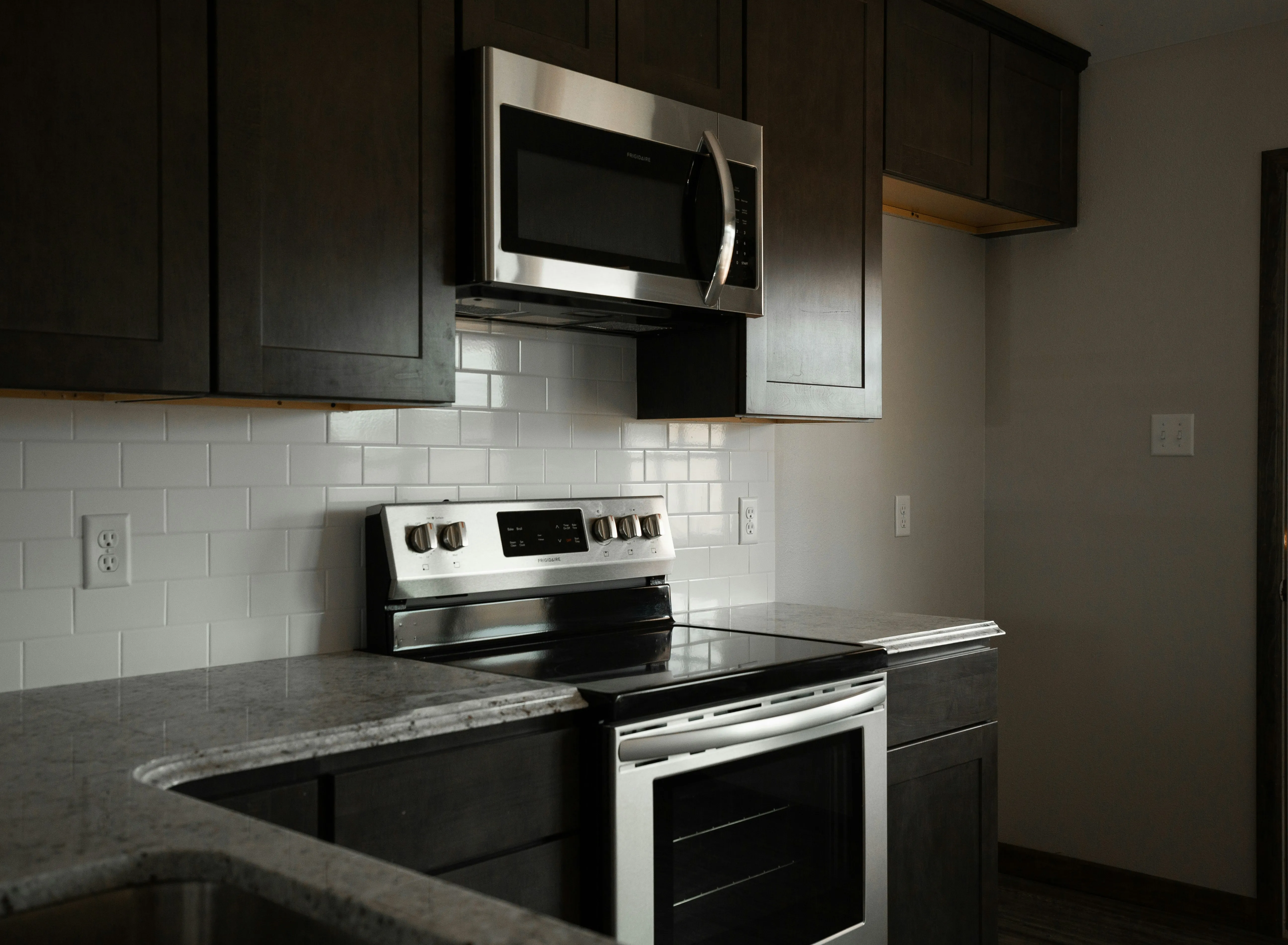
Microwave ovens are prone to malfunction during use. I will sort out some common problems, explain the corresponding causes and solutions, and easily troubleshoot and fix them.
.png)
1. Failure to heat
Cause of failure: Magnetron aging leads to reduced microwave emission capability; High-voltage capacitor breakdown or capacity decay affects energy storage efficiency; Reverse breakdown of high-voltage diodes blocks high-voltage circuits; Poor contact of the door switch leads to the failure of the safety interlock.
Solution: For magnetron testing, use a megohmmeter to test the insulation resistance between the filament and the anode (normal value ≥100MΩ). If abnormal, replace the magnetron of the same model; For high-voltage capacitance testing, use the capacitance range of a multimeter to measure the capacitance (normal value: 0.8-1.2μF). If the capacitance deviation exceeds 20%, replace it. For high-voltage diode testing, use the diode range of a multimeter to test forward conduction and reverse cut-off characteristics, and replace if abnormal; When inspecting the door switch, check the contact pressure, clean the oxide layer and adjust the spring tension.
2. Abnormal noise
Fault cause: Abnormal noise during operation due to wear of the cooling fan bearing; Vibration caused by eccentricity of the turntable motor or gear wear; Transformer core looseness generates electromagnetic noise; High-frequency oscillation of the high-voltage rectifier causes whistling.
Solution: Fan maintenance requires disassembling the motor, replacing worn bearings and adding high-temperature resistant grease; Turntable motor inspection requires testing the winding resistance value (normal value 100-500Ω), and replacement if abnormal; For transformer fixation, check the core fastening screws and add shock-absorbing rubber pads; For high-voltage rectifier maintenance, check if the lead welds are firm and re-weld or replace them if necessary.
.png)
3. Gate system failure
Cause of failure: The aging of the door seal is manifested as rubber hardening and cracking, resulting in microwave leakage; Deformation of the door hook causes false triggering of the door opening and closing; Fatigue of the hinge spring causes the door to pop open automatically.
Solution: Replace the door seal with the original factory model and make sure it fits the door frame evenly during installation; Calibration of the door hook requires adjusting the position of the door hook to ensure accurate contact of the door opening and closing contacts; Hinge maintenance requires checking the spring tension and replacing high-strength springs if necessary.
4. Control Panel failure
Cause of failure: Poor contact due to oxidation of key contacts; Display backlight failure causes display anomaly; The main control chip program malfunctioned.
Solution: For key cleaning, wipe the contacts with anhydrous alcohol to restore contact performance; Backlight replacement requires disassembling the panel and replacing the LED beads of the same model; To restart the main control chip, try power-off for 30 seconds and then power-on again. If it still doesn't work, contact after-sales for system reset or motherboard replacement.
.png)
5. The turntable does not turn
Cause of failure: Open circuit in the winding of the turntable motor prevents starting; Wear of the drive gear causes slippage; Deformation of the turntable bracket causes jamming.
Solution: For motor inspection, the winding resistance value needs to be tested (normal value 50-200Ω), and it should be replaced when there is an open circuit. Gear maintenance requires checking the wear of the tooth surface and replacing it if it is excessively worn; Bracket calibration requires adjusting the position of the bracket to ensure smooth rotation of the turntable without jamming.
6. Unusual odors and smoke
Fault cause: Burnt smell produced by burning food residue; Magnetron overheating causes insulating material to volatilize; High-voltage capacitor breakdown causes arc discharge.
Solution: Use a special cleaner for cleaning the inner cavity, with a focus on cleaning areas prone to dirt such as waveguide ports and turntable brackets; Check the magnetron heat dissipation to ensure that the cooling fan is functioning properly and clean the dust from the vent; Capacitor maintenance requires checking if the insulation of the leads is damaged and replacing and re-soldering if necessary.
.png)
Conclusion:
Master these repair tips to fix minor microwave malfunctions on your own, which is convenient, cost-effective and extends the lifespan of your appliances.